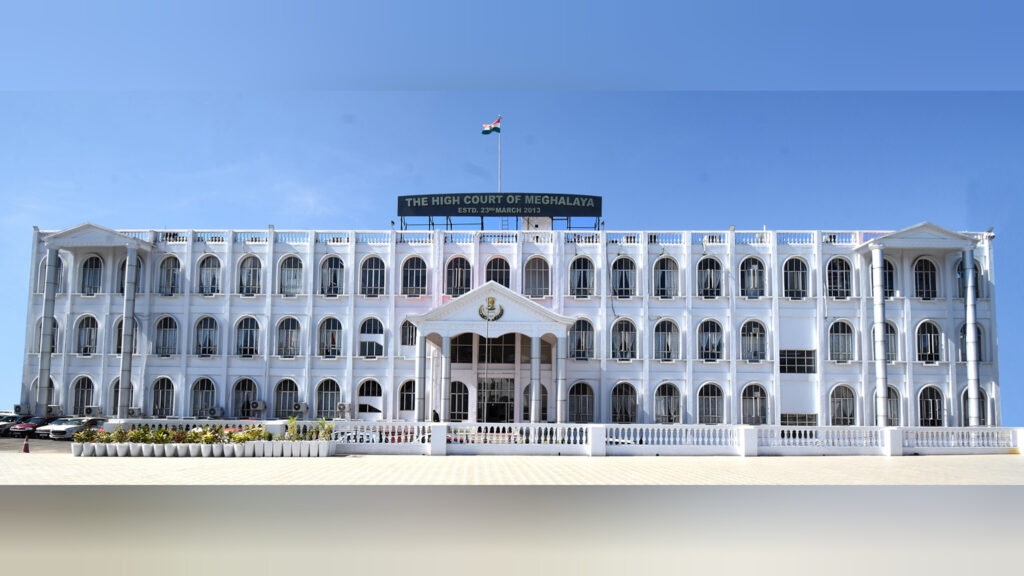
Shillong, March 17: The Meghalaya High Court has dismissed a petition challenging a show cause notice and summons issued in connection with a cheque bounce case, ruling that the provisions of Section 223 of the Bharatiya Nagarik Suraksha Sanhita (BNSS) do not apply to proceedings under the Negotiable Instruments Act.
The case was filed by Banteilang Nongmalieh, who approached the High Court seeking to quash a show cause notice issued through an order dated December 19, 2024 in C.R. Case No. 94 of 2024 by the Chief Judicial Magistrate First Class at Nongpoh in Ri-Bhoi district.
The petitioner argued that the magistrate had failed to comply with the mandatory provisions of Section 223 of the BNSS, and therefore the order issuing summons and the proceedings arising from it should be set aside.
The respondent, Bendar Rani, had filed the complaint before the Nongpoh court alleging an offence under Section 138 of the Negotiable Instruments Act, 1881, which deals with dishonour of cheques. Following the complaint, the magistrate issued summons to the petitioner through the December 2024 order.
While hearing the matter, the High Court examined recent judicial precedents, including a ruling by the Karnataka High Court and directions issued by the Supreme Court. These rulings clarified that since the Negotiable Instruments Act is a special law, there is no requirement for a magistrate to issue summons under Section 223 of the BNSS at the pre-cognizance stage in cheque bounce cases.
After considering the arguments and legal provisions, the High Court observed that Section 223 of the BNSS has no application in proceedings under Section 138 of the Negotiable Instruments Act. The court also rejected the petitioner’s contention regarding the interpretation of the word “shall” in the Supreme Court’s directions.
Chief Justice Revati Mohite Dere concluded that there was no merit in the petitioner’s challenge and that no interference was required in the magistrate’s order dated December 19, 2024. The court accordingly dismissed the petition, while clarifying that all contentions of the parties on the merits of the case remain open.