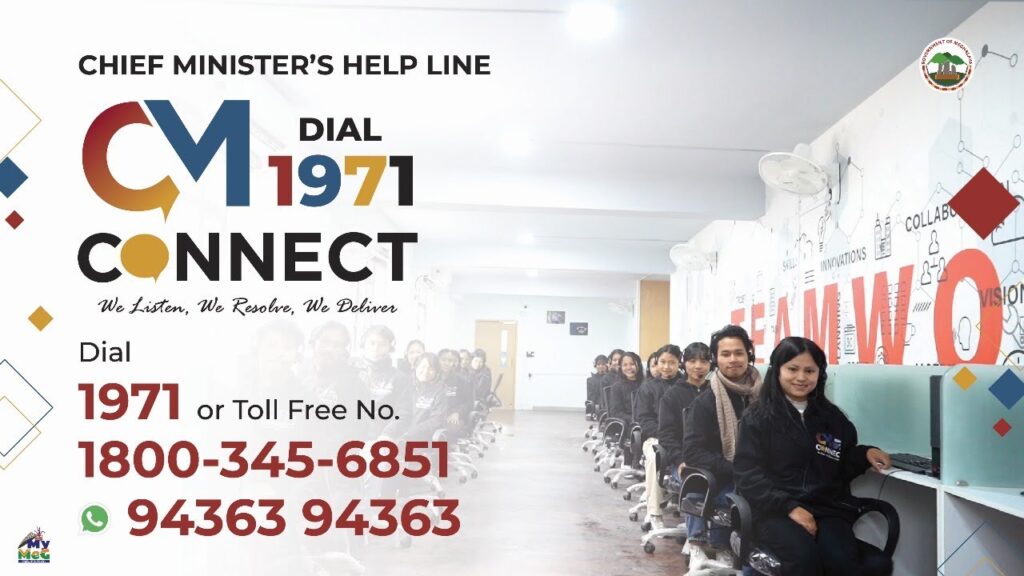
Shillong, April, 21: Redefining the citizen-government interface through its flagship initiative, the CM-CONNECT, Government of Meghalaya has institutionalised direct public engagement, strengthened grassroots governance, and ensured time-bound grievance redressal, in the State. Led by Conrad K. Sangma, Chief Minister, this initiative reflects a structured and scalable governance model that integrates community participation with administrative responsiveness.
Since its launch in February 2024, CM-CONNECT has facilitated overall 70,000 citizen assistance and approximately 20,000 direct interactions, with reported satisfaction levels reaching 95 percent, indicating a strong shift toward participatory governance as a measurable outcome rather than a stated intent.
Expanding Citizen Engagement Through Measurable Outcomes : The initiative has demonstrated significant traction across key performance indicators. Over 5,000 grievances have been registered through multiple modes, with 65% percent grievances closed within an average timeline of 116 days. Notably, nearly 30 percent of grievances have been addressed on the spot during public interaction programmes through coordinated departmental responses. These outcomes underscore a governance approach that prioritises accessibility, accountability, and time-bound delivery of services.
Institutionalising Dorbar Partnership in Governance : A defining feature of CM-CONNECT is the integration of traditional institutions into formal governance processes. Dorbar Shnongs have been positioned as critical partners, enabling community-led articulation of local issues such as infrastructure gaps, water supply concerns, and educational needs.
The State leadership has consistently acknowledged the role of traditional bodies as foundational pillars of grassroots governance, contributing to community participation, preservation of local customs, and social cohesion. Their structured involvement under CM-CONNECT represents a significant convergence of customary institutions with formal administrative systems.
Bridging Last-Mile Governance Through Local Connectors : To ensure outreach in remote and geographically dispersed regions, Village Data Volunteers have also been deployed as key facilitators, acting as a bridge between citizens and government systems. This mechanism ensures that distance does not translate into exclusion from governance processes.
The Government has committed to scaling CM-CONNECT public interaction platforms across all 56 blocks of the State, reinforcing its intent to achieve comprehensive geographic coverage.
Scaling Across Regions and Languages : The initiative has been implemented across diverse locations in the State including Adokgre, Bhoirymbong, Nongstoin, Ranikor, Mawkynrew, Amlarem, Laskein, Betasing, and Tura, ensuring inclusive outreach across districts and communities. Recognising language as a critical enabler of participation, CM-CONNECT services are delivered in English, Khasi, Garo, Pnar, and Hindi. This multilingual approach enables citizens to communicate concerns in their preferred language, thereby enhancing inclusivity and reducing barriers to engagement.
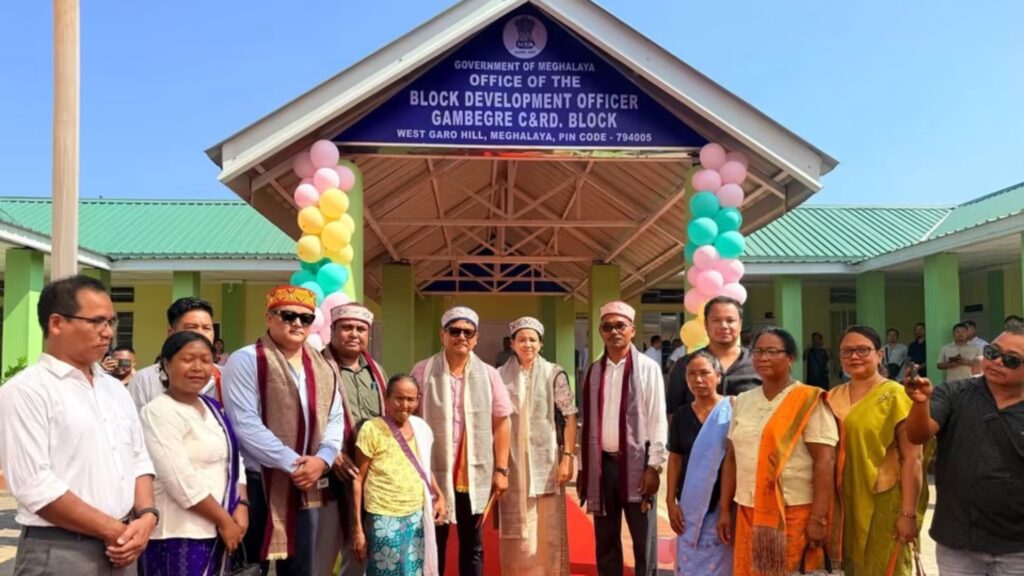
Digital Infrastructure Anchored in Grassroots Access : CM-CONNECT is supported by a dedicated digital ecosystem, including a toll-free helpline (1971), designed to provide direct and accessible communication channels between citizens and the government. The infrastructure is decentralised, ensuring that services are accessible at the community level rather than being confined to administrative centres. Facilities such as the CM-CONNECT Centre in Tura further demonstrate the State’s focus on expanding governance access beyond Shillong and into regional hubs.
Advancing a Model of Participatory Federalism : Thus, CM-CONNECT is increasingly being positioned as a replicable governance model that aligns traditional institutional strengths with modern administrative systems. By formalising community engagement, ensuring responsiveness, and integrating local governance structures, the Government of Meghalaya is advancing a framework that strengthens participatory federalism in practice.
The initiative reflects a broader governance philosophy that places citizens at the centre of policy execution while reinforcing the role of traditional institutions like the Dorbar Shnongs, in shaping inclusive and accountable governance outcomes.
Public grievances resolved : At the CM-CONNECT platform, residents of Amlarem brought forth key issues and challenges before the Chief Minister, ranging from road connectivity and water supply to education and welfare schemes. In West Jaintia Hills, since the inception of the platform, 52 percent of the registered grievances of the citizens have been successfully addressed within a stipulated timeframe, while in Amlarem 50 percent of the grievances have been resolved.
It was at the CM-CONNECT event at Mawkynrew that the CM announced 1,700 new mini Anganwadi Centers to be established across Meghalaya within two years to cover all uncovered villages. As for the development of agriculture, the CM announced the expansion of CM FARM+ and CM SEEDS schemes with increased funding to support diverse agricultural needs.