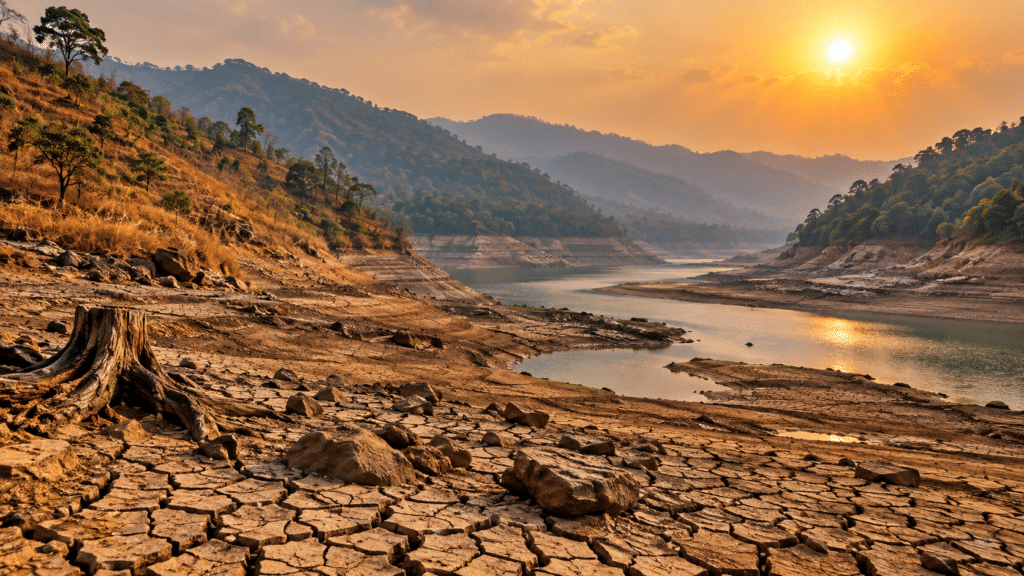
Shillong, October 6: Meghalaya recorded a rainfall deficiency of more than 50 per cent due to El Nino conditions, but early showers in March and April helped the state avoid a more severe water crisis, Chief Minister Conrad K. Sangma said on Tuesday.
Sangma said the Climate Council, headed by him, had reviewed the possible impact of El Nino around three to four months ago. “Reports from IMD indicated we would see roughly average rainfall. But as the situation unfolded, those reports were not entirely accurate and we had almost 50 per cent-plus deficiency,” he said.
The chief minister said early rainfall provided some relief despite significantly lower-than-normal rainfall during August and September. “We had some early rains in March and April which allowed continuity of flow. Though we have seen very less rainfall in August and September, much lower than normal, because of the early showers there was some relief,” he said.
Sangma said the government has taken several measures under the State Water Policy to improve water security, including satellite mapping of around 17,000 springs across Meghalaya. “We identified springsheds in extremely dry situations and took specific measures through the Soil Conservation and Water Resources departments to rejuvenate those springs. Today we are seeing results for the last two-three years,” he said.
He also said a ₹300-crore World Bank-supported project is being implemented in the Umngi and Ganol catchments, which are important for the water supply systems of Shillong and Tura. “We are working with localities, traditional heads and communities to protect catchment areas, rejuvenate springs, grow plantations and diversify livelihood so people don’t depend on forest products,” Sangma said.
Under the Payment for Ecosystem Services programme, the chief minister said nearly one lakh hectares of forest are being protected by local communities in return for government payments, describing it as one of the largest such models in the country. He further said nearly 50 per cent of MGNREGS funds are being utilised for the creation and protection of water bodies, including small reservoirs and check dams.
Sangma acknowledged that climate conditions remain dynamic and that government interventions may not completely offset their impact. “Things are changing and are very dynamic. Sometimes actions we take may not mitigate everything entirely. But we are very much aware and taking steps to mitigate El Nino and climate change at large,” he added.