SHILLONG, NOV 11: The Meghalaya Basin Development Authority (MBDA), through its MegLIFE initiative, has undertaken the restoration of 84.77 hectares of degraded land affected by coal mining in Agrenggittim and Dobakol Awemong villages under Siju Block in South Garo Hills district, combining environmental rehabilitation with sustainable livelihood opportunities for local communities.
According to a presentation by MegLIFE, the restoration programme focuses on reviving degraded landscapes through Assisted Natural Regeneration (ANR), aromatic grass cultivation, afforestation and community-based livelihood activities.
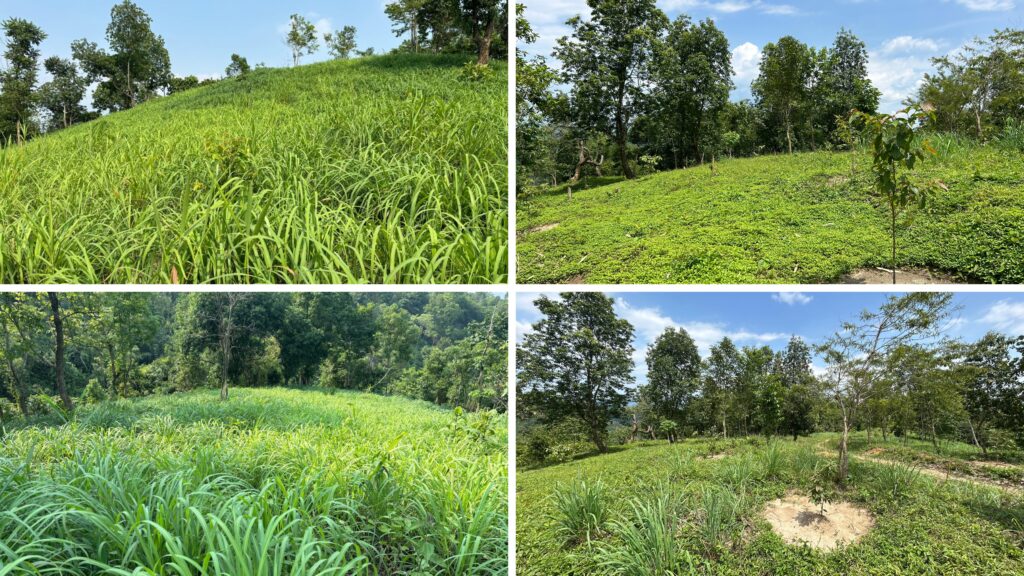
Of the total area covered, 70.83 hectares have been brought under Assisted Natural Regeneration, involving the planting of approximately 400 saplings per hectare to support vegetation recovery and restore the ecological condition of the degraded landscape.
Another 13.94 hectares have been restored through the cultivation of aromatic grasses, including citronella and lemongrass, which are intended to improve degraded soil conditions while providing opportunities for income generation.
Agrenggittim village, which covers an area of 589.25 hectares and has a population of 264, was once associated with coal mining activities that left significant portions of its landscape degraded.
According to the presentation, coal mining in the village came to an end in 2003. However, unscientific mining practices had resulted in approximately 14 hectares of mining land becoming inundated, alongside severe degradation of the surrounding environment.
The village also has approximately 36.92 hectares of barren land, posing additional challenges for environmental restoration and sustainable land management.
Apart from land degradation, the community has faced problems relating to water quality.
Although Agrenggittim has several water sources, the presentation noted that salinity and turbidity have made the water unsuitable for direct consumption, highlighting the need for improvements in water quality.
As part of the restoration initiative, citronella cultivation was introduced on coal mining-affected land in 2023.
The aromatic grass was planted as an initial measure to support the rehabilitation of degraded soil before undertaking further tree plantation and natural regeneration activities.
According to MegLIFE, the phased restoration approach enabled tree plantation activities to be undertaken from 2025, following the initial cultivation of citronella.
The initiative involved the planting of approximately seven lakh citronella slips across 13.94 hectares, with women from the local community actively participating in the plantation activities.
The cultivation of citronella is intended to serve a dual purpose by supporting soil restoration and water conservation while generating economic opportunities through the production of aromatic oils.
To strengthen livelihood activities, MegLIFE also established a distillation unit for processing harvested aromatic grasses into essential oils.
Local villagers were provided training to operate and manage the distillation unit independently, enabling them to participate in the processing and value addition of agricultural products.
The initiative also facilitated market linkages to support the sale of essential oils, with the objective of providing sustainable income opportunities for communities affected by the decline of coal mining activities.
According to the presentation, the restoration programme has brought visible improvements to the affected landscape, including vegetation recovery and changes in the condition of water bodies and siltation levels.
The initiative has also demonstrated how community participation can contribute to environmental rehabilitation while creating alternative sources of livelihood.
The involvement of local women in citronella cultivation and the training of villagers in essential oil processing have been key components of the programme.
The restoration activities in Agrenggittim and Dobakol Awemong are intended to address the long-term environmental consequences of coal mining while helping communities develop sustainable economic activities.
Through the combination of aromatic grass cultivation, assisted natural regeneration, afforestation, essential oil processing and market support, MegLIFE aims to transform degraded mining landscapes into productive and environmentally sustainable areas.
The initiative highlights the potential of community-led restoration in addressing ecological damage while providing livelihood opportunities for rural communities in South Garo Hills.
Tighten this into a sharper news reportReduce repeated restoration pointsAdd a concise key-findings structure