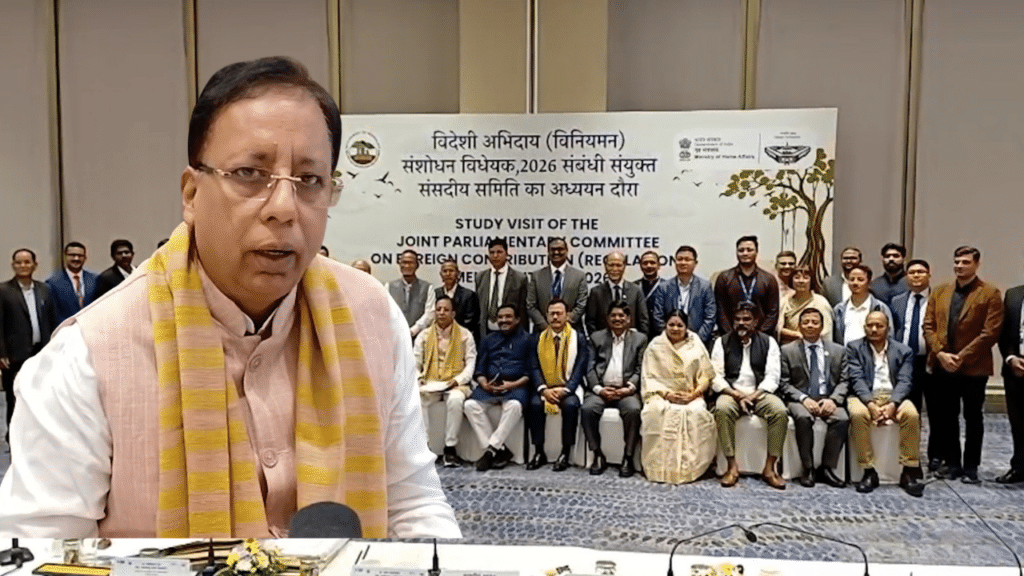
Shillong, November 2: Chairman of the Joint Parliamentary Committee (JPC) on the Foreign Contribution (Regulation) Amendment Bill, 2026, Dr. Sanjay Jaiswal, on Monday sought to allay concerns over the proposed amendments, stating that religious organisations would not be adversely affected and that only six per cent of foreign contributions received in India were directed towards religious bodies. Dr. Jaiswal, who visited Shillong along with members of the parliamentary committee, held consultations with religious leaders and representatives of various organisations to hear their concerns and suggestions regarding the proposed amendments to the Foreign Contribution (Regulation) Act (FCRA).
Speaking to reporters, he said the primary objective of the consultations was to understand the difficulties faced by organisations receiving foreign contributions and to gather suggestions that could help improve the proposed legislation. He explained that the FCRA was intended to regulate and maintain proper records of funds received from foreign sources and ensure accountability in their utilisation.
Dr. Jaiswal pointed out that the FCRA had been in existence since 2010, when the Congress-led government was in power, and claimed that the legislation had not faced similar opposition at that time. However, he said the BJP-led Central Government’s efforts to amend and strengthen the law had attracted considerable opposition, particularly from organisations concerned about the possible implications of the proposed changes. He assured that all concerns and recommendations submitted during the consultations would be placed before the Joint Parliamentary Committee for consideration before the proposed amendments were taken up in Parliament.
Addressing apprehensions that the amendments could adversely affect religious institutions receiving financial assistance from abroad, Dr. Jaiswal said that, according to the figures available to him, only six per cent of foreign contributions received in India were directed towards religious organisations. He stated that the remaining 94 per cent went to voluntary organisations, non-governmental organisations and other recipients whose activities and utilisation of foreign funds also required proper scrutiny. He maintained that the government’s intention was to ensure transparency and accountability in the receipt and utilisation of foreign contributions rather than to interfere with religious activities.
On the requirement that foreign contributions be received through designated accounts with the State Bank of India in New Delhi, Dr. Jaiswal clarified that the arrangement was primarily intended to facilitate centralised monitoring and record-keeping. He explained that organisations receiving foreign contributions would not have to travel to New Delhi to withdraw or access their funds, as banking transactions could be carried out from other locations.
Meanwhile, Chief Minister Conrad K. Sangma welcomed the JPC’s decision to hold consultations in Shillong, describing the visit as an important opportunity for religious organisations and other stakeholders in Meghalaya to present their concerns directly to the parliamentary committee.
Speaking to reporters, Sangma said he had personally requested Dr. Jaiswal to visit Shillong shortly after the latter was appointed Chairman of the Joint Parliamentary Committee. Recalling their association during his tenure as a Member of Parliament in 2016, Sangma said he had developed a strong working relationship with Dr. Jaiswal and several other parliamentarians. He expressed confidence in Dr. Jaiswal’s ability to lead the committee, citing his experience, seniority and understanding of issues affecting different parts of the country. “When he took over, I immediately called him and requested that he should come to Shillong and all the different organisations and religious organisations that are receiving funding from foreign agencies, we could facilitate the meetings to take place here in Shillong,” Sangma said.
According to the Chief Minister, Dr. Jaiswal readily agreed to the proposal, paving the way for the committee’s visit to Meghalaya. Sangma said the consultations provided an opportunity for stakeholders, particularly organisations dependent on foreign contributions, to raise their apprehensions and present suggestions concerning the proposed amendments. He informed that the committee had given the participating organisations 15 days to submit their written views, objections and recommendations. “What is important is that all stakeholders who had concerns got a chance to express their concerns. I was told the JPC was very open-minded and discussed all aspects in detail and has given 15 days to the organisations to submit their stands and concerns,” Sangma said.
The Chief Minister described the consultation as a healthy democratic exercise and expressed hope that the discussions would lead to positive outcomes. He also informed that he met the committee members at Umroi Airport before their departure and thanked them for choosing Shillong as one of the locations for their consultations.
According to Sangma, the committee members assured him that they had listened to the concerns raised by stakeholders and would carefully examine the issues before deciding on the way forward. The Chief Minister further informed that the parliamentary committee would continue its consultations in Chennai and other parts of South India.
Expressing his appreciation to Dr. Jaiswal and the committee members, Sangma said he was pleased that Shillong had been selected as one of the venues for the consultations, allowing organisations in Meghalaya to directly present their views on the proposed FCRA amendments.