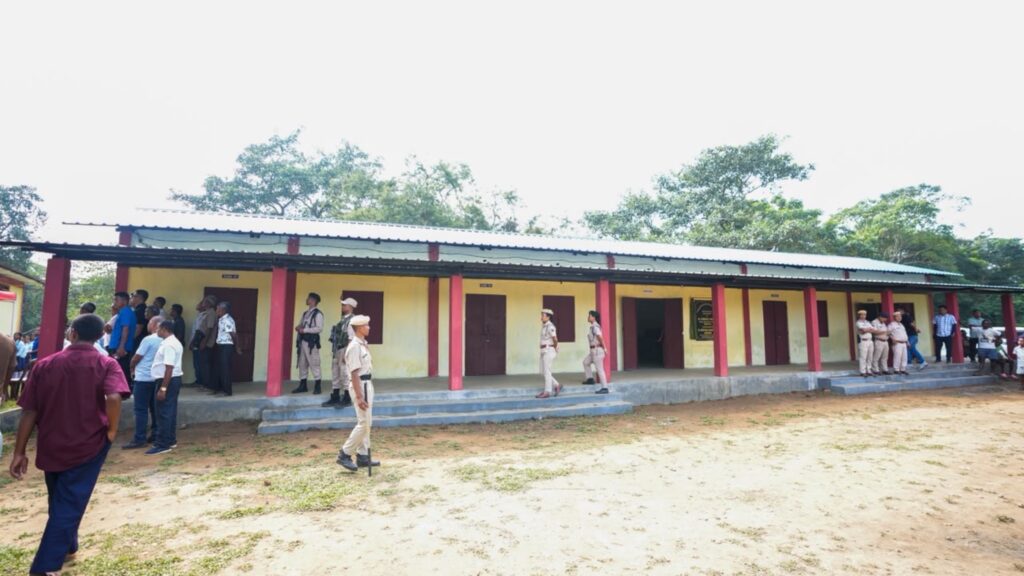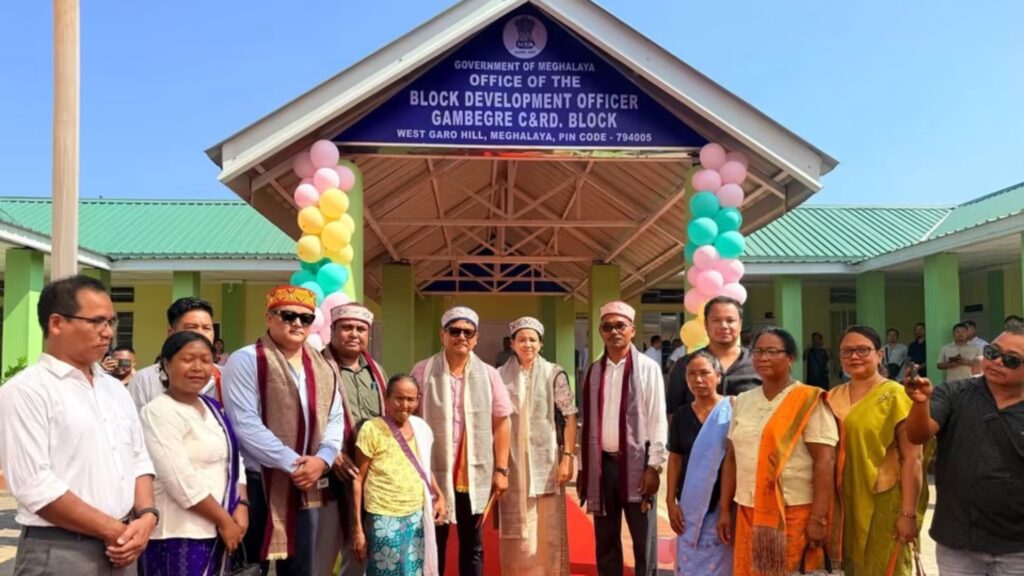
Shillong, October 2: The Public Health Engineering (PHE) Department, Government of Meghalaya, has concluded statewide Jal Arpan celebrations covering 75 completed rural water supply schemes, marking what the department described as the largest collective Jal Arpan celebration held simultaneously in the state. The celebrations were held across different districts and divisions on October 1 and 2 and served as community-led dedication programmes for completed water supply infrastructure.
According to the PHE Department, local communities, Village Water and Sanitation Committees (VWSCs), public representatives, schoolchildren, district administrations and department officials participated in the programmes. The 75 schemes include newly commissioned, augmented and upgraded rural water supply systems that are now serving communities across Meghalaya. The celebrations covered areas in Eastern West Khasi Hills, West Khasi Hills, South West Khasi Hills, West Jaintia Hills, East Garo Hills, West Garo Hills, North Garo Hills, Ri-Bhoi, East Jaintia Hills, East Khasi Hills, South Garo Hills and South West Garo Hills.
The department said completion of the schemes reflects Meghalaya’s continued progress under the Jal Jeevan Mission. As of September 2026, the state had provided functional household tap water connections to more than 5.47 lakh rural households, representing around 84 per cent coverage. Of the 7,795 Jal Jeevan Mission schemes in the state, 6,195 have already been physically completed, the department stated.
The Jal Arpan programmes also emphasised community ownership, operation and maintenance of water supply infrastructure, water quality monitoring and sustainability of water sources. The PHE Department said Meghalaya’s “Catchment-to-Tap” approach continues to guide efforts to ensure reliable and climate-resilient drinking water services, with communities playing an active role in protecting and managing local water resources.
The department further reiterated its commitment to strengthening service delivery under Jal Jeevan Mission 2.0, with a focus on ensuring regular, adequate and safe drinking water supply to rural households while promoting long-term sustainability of water sources and community-managed water systems.