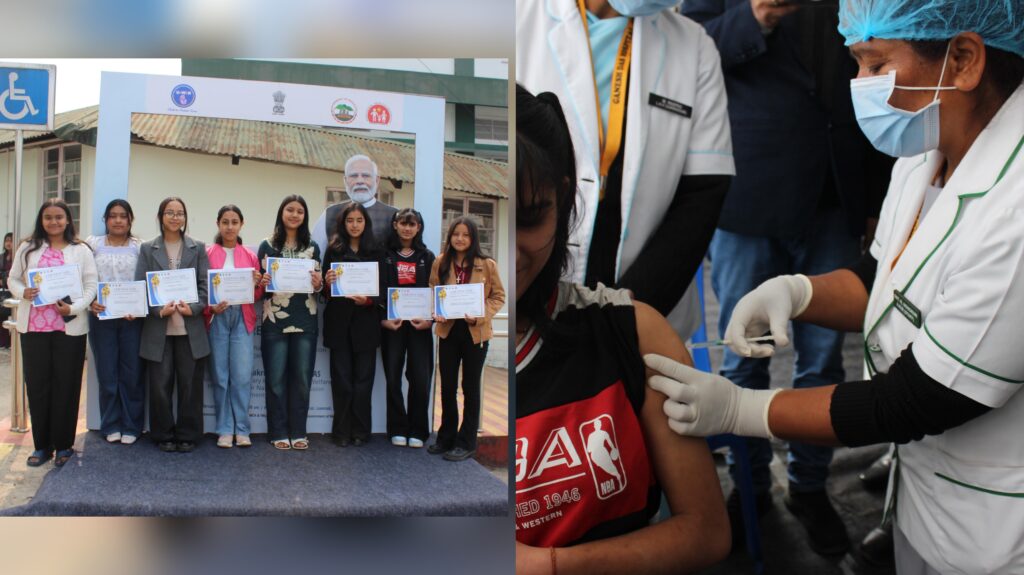
Shillong, February 28 : The Government of Meghalaya on Friday launched the National Human Papillomavirus (HPV) Vaccination Campaign at Ganesh Das Hospital, Lawmali, Shillong, in alignment with the national launch by the Prime Minister of India in Rajasthan.
The State-level programme was led by Ramakrishna Chitturi, IAS, Additional Secretary, Health & Family Welfare and Mission Director, National Health Mission, Government of Meghalaya. The event was attended by senior government officials, health professionals, development partners, media representatives, Village Health Committee (VHC) members from Nongmensong and Rynjah, and the Headman from Mawlai.
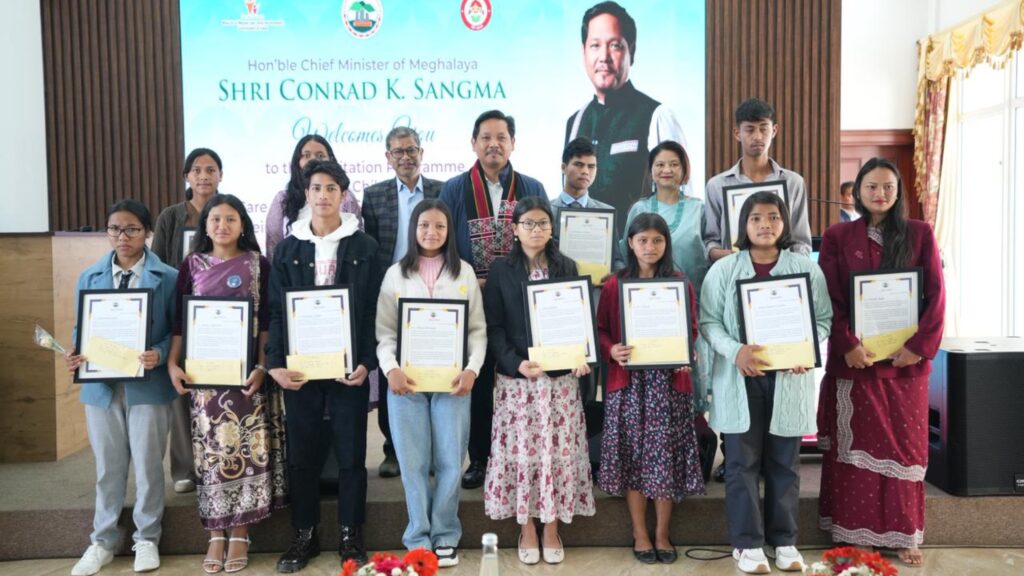
The campaign was formally launched by nine 14-year-old girls, who became the first beneficiaries of the HPV vaccine in Meghalaya.
The programme commenced with a keynote address by State Immunization Officer Dr. P. R. Marak, who outlined the guidelines of the vaccination campaign.
Dr. Shailinia Syiem, Gynaecologist and President (State), O&G Society, FOGSI, delivered a detailed presentation on HPV vaccine and cervical cancer. She highlighted that the vaccine should be administered to girls aged 14 years and described it as the only cancer-preventing vaccine. She stated that early vaccination has a success rate of over 90 per cent.
Dr. Syiem also noted that women in their 20s, 30s, and up to 45 years of age can receive the vaccine, with protection levels reaching up to 88 per cent when combined with regular screenings. She further emphasized that HPV can affect not only girls and women but also boys and men.
Addresses were also delivered by Dr. Angel Kharduit, District Medical and Health Officer (DMHO), East Khasi Hills, and Dr. Rapbor Laloo, District DIO, East Khasi Hills District.
Cervical cancer remains one of the most serious public health challenges affecting women in India and is the second most common cancer among women in the country. In 2024 alone, India recorded an estimated 78,499 new cases and over 42,000 deaths due to cervical cancer.
In Meghalaya, 332 cases of cervical cancer have been diagnosed, with figures rising sharply from 27 cases in 2020–21 to 332 cases by 2025–26. Officials stated that the upward trend underscores the urgent need for preventive measures such as HPV vaccination.
Scientific evidence indicates that 99.7 per cent of cervical cancer cases are caused by persistent infection with high-risk types of the Human Papillomavirus (HPV). In India, HPV types 16 and 18 account for the majority of cases. The HPV vaccine is considered safe and effective, providing strong protection against these high-risk virus types. Globally, more than 500 million doses have been administered without major safety concerns.
Under the campaign, girls aged 14 years—those who have completed 14 years but have not yet turned 15—are being covered. An estimated 39,000 eligible beneficiaries have been identified across Meghalaya.
Vaccination is being carried out at 187 planning units, including Primary Health Centres, Community Health Centres, and District Hospitals. More than 9,121 trained health personnel, comprising doctors, nurses, ANMs, and ASHA workers, have been deployed statewide to ensure smooth implementation.
The single-dose Gardasil-4 (Quadrivalent HPV vaccine covering types 6, 11, 16, and 18) is administered as a 0.5 ml intramuscular injection in the left upper arm and maintained at +2°C to +8°C under the cold chain system.
Minor side effects such as mild pain or swelling at the injection site, low-grade fever, or headache may occur but generally subside within a few days. A total of 144 health facilities have been designated to operate 24×7 for monitoring and management of any Adverse Events Following Immunization (AEFI).
All beneficiaries are registered on the U-WIN digital platform prior to vaccination through self-registration, assisted registration by health workers, or on-site digital registration. Vaccinated beneficiaries can download their vaccination certificates from the U-WIN app.
Officials informed that the intensive campaign will be conducted for three months, after which HPV vaccination will continue as part of routine immunization services. Vaccination is voluntary, and parental or guardian consent is mandatory prior to administration.