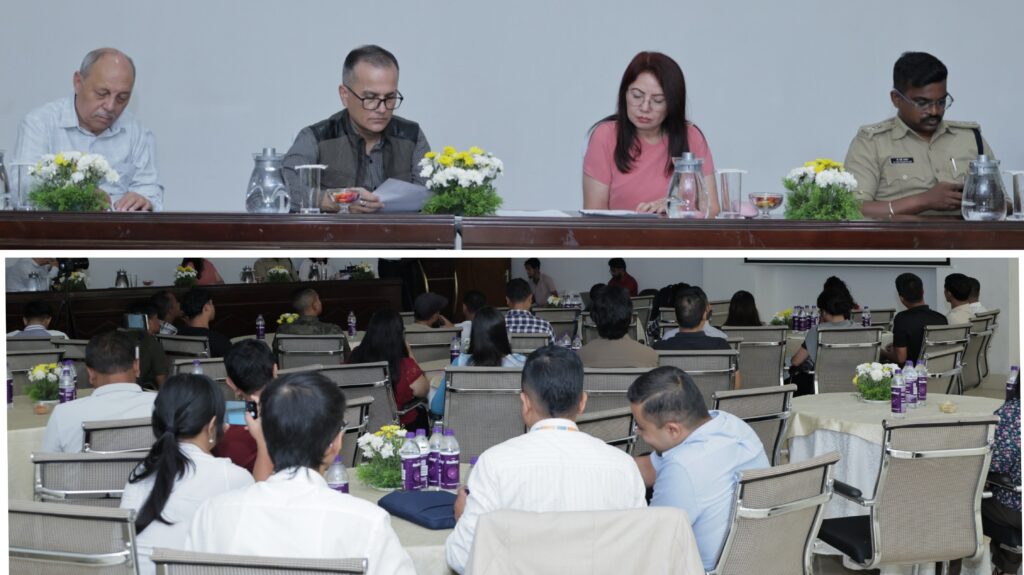
Shillong, August 12: The Department of Tourism, Government of Meghalaya, on Wednesday conducted a pilot workshop at the State Convention Centre to outline the rollout plan for the upcoming Meghalaya Tourism Tourist Taxi Booking App.
The workshop brought together government officials, tourism stakeholders and tourist taxi drivers to discuss the platform’s operational framework, stakeholder onboarding process, incentives, regulatory requirements and phased implementation strategy.
Among those present were RM Kurbah, IAS, Commissioner and Secretary, Department of Tourism; Dr Hari Prasanth M.R., IPS, Superintendent of Police (Traffic), East Khasi Hills; Philip F. Tariang, Deputy Director, Department of Tourism; E. Banlumlang Blah, President of the Tour Operators Association of Meghalaya (TOAM), along with senior officials from allied departments and tourist taxi drivers.
Addressing the workshop, Kurbah said Meghalaya’s position as a major tourist destination made it important to enhance the overall visitor experience. She clarified that the app was not intended to compete with the existing taxi ecosystem but to protect tourists from fraudulent payment practices.
She said the platform would integrate coordination with the police and traffic departments and would incorporate safeguards to protect both tourists and tourist taxi drivers, including vehicles belonging to PRIME Meghalaya beneficiaries, from fraudulent activities.
The app will be GPS-enabled and OTP-based to enhance security and will also be supported by the Meghalaya Tourism Helpline, operated jointly by the Tourism Department and the Avenues team.
The platform is designed to provide a safe, transparent and efficient digital link between tourist taxi operators and visitors, hotels, resorts, tour operators and other tourism stakeholders. It is also expected to improve accessibility, driver accountability and record-keeping.
In his welcome address, Philip F. Tariang described the initiative as the outcome of a long-drawn process, with the broader vision of combining taxi booking services with curated information on tourist destinations.
He said development of the platform began in late 2024 and has since been refined through consultations with taxi associations and PRIME Vehicle Beneficiaries. The full official launch of the platform will take place at a later stage.
A major feature of the workshop was a hands-on training session for tourist taxi drivers. XLayer Technologies also demonstrated the Meghalaya Tourism Cab Booking App and explained its operational mechanism to participating drivers.
Under Phase-I of the rollout, the platform will initially cover 200 PRIME Vehicle Beneficiaries along with other tourist taxi operators, with a focus on long-distance tourist transport services.
Tourist taxi operators holding valid permits, licences, insurance and other statutory clearances will be eligible to register. While associations may assist in the onboarding process, eligibility will be assessed individually. Driver and vehicle verification will be carried out jointly by the Transport Department and Meghalaya Police.
The platform will comprise an administrative portal, a driver application and a customer booking interface. Ride requests will be sent directly to active drivers, while payments will be made directly between customers and drivers. The Department will not charge any commission during the initial phase.
The Tourism Department also plans to integrate the platform with the Meghalaya Tourism Helpline for customer support and grievance redressal. It is also examining the possibility of extending the service to tourist-oriented two-wheeler operators in future phases.
Following the workshop, the Department confirmed that the online cab booking platform will proceed towards its Phase-I launch, covering PRIME Vehicle Beneficiaries and other eligible tourist taxi operators.
Mandatory verification by the Transport Department and police authorities will form part of the process, with eligibility determined on an individual basis rather than through associations. A detailed incentive framework and stakeholder engagement strategy will be finalised separately, while training and awareness programmes will precede the full-scale rollout.