Shillong, March 16: The Hynñiewtrep Integrated Territorial Organisation (HITO) has urged the National Democratic Alliance (NDA) government to seriously examine the aspiration of the indigenous people of Meghalaya to depoliticize the Autonomous District Councils (ADCs) in the state.
In a letter addressed to Ravi Shankar Prasad, Member of Parliament and former Union Law Minister, HITO’s central body expressed appreciation for his recent public statements concerning the protection of indigenous rights, identity, and cultural heritage in Meghalaya.
The organisation, however, pointed out that certain recommendations made earlier by the National Commission to Review the Working of the Constitution (NCRWC) in 2002, which suggested the inclusion of non-tribals in the Autonomous District Councils, appear to contradict the assurances given in his recent statements.
HITO also welcomed the recognition of the issue of illegal influx of Bangladeshi nationals into the region, particularly through Garo Hills, stating that the matter has long been raised through several memoranda submitted to the Centre. The organisation recalled that it had earlier submitted an urgent representation to the Ministry of Home Affairs on July 4, 2025, seeking the extension of the Inner Line Permit system to the entire state of Meghalaya.
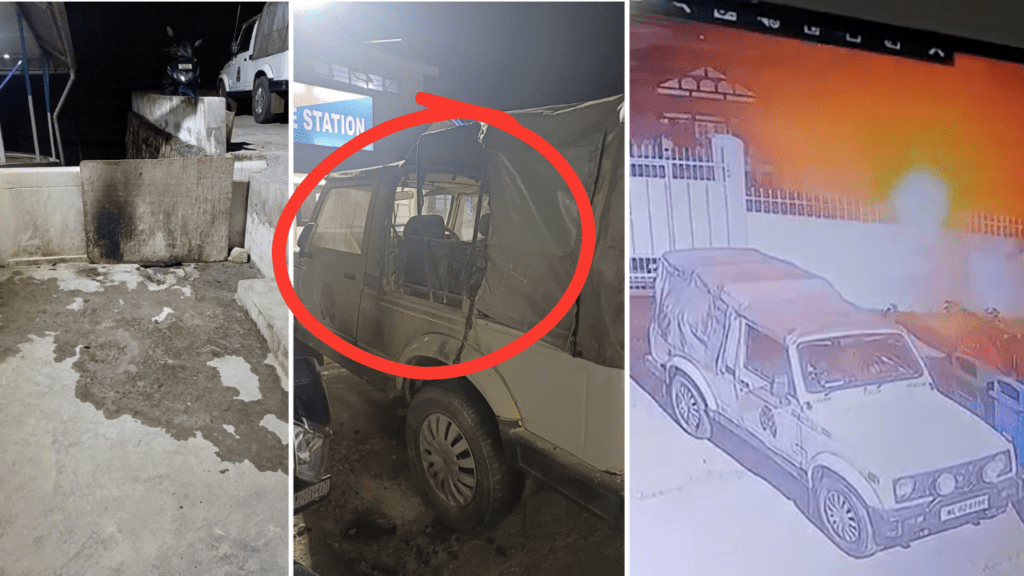
According to HITO, the recent incidents of violence reported in Garo Hills highlight the need for stronger measures to safeguard the rights and security of indigenous tribal communities. The organisation stressed that the central government must demonstrate seriousness in addressing illegal immigration and its implications.
At the same time, HITO cautioned that the statements made by national leaders should not be viewed merely as political rhetoric ahead of the upcoming elections to the Garo Hills Autonomous District Council. The group urged the Centre to consider structural reforms to depoliticize the ADC system.
The organisation argued that the present framework of the district councils operates within a party-based political structure dominated by parties recognised by the Election Commission of India. HITO maintained that this system conflicts with the traditional governance practices of the Khasi people, which historically function through consensus-based and partyless institutions.
HITO further highlighted that tensions have persisted since the formation of the United Khasi and Jaintia Hills Autonomous District Council on June 27, 1952, noting that several agitations and conflicts have occurred over the decades. It cited the 1972 MDC elections in the Khasi Hills Autonomous District Council, where two non-tribals were elected from Laban and Laitumkhrah constituencies, which was followed by violent agitations in the late 1970s and early 1980s demanding the eviction of illegal infiltrators.
The organisation also raised concerns about the differing roles of traditional institutions across communities. It pointed out that while Nokmas in Garo Hills can contest elections and hold political offices such as MDC, MLA, or MP, traditional Khasi and Jaintia chiefs often face restrictions related to appointments under the district councils.
HITO asserted that a possible solution would be to amend the provisions of the Sixth Schedule of the Constitution of India to bar recognised political parties from fielding candidates in MDC elections, thereby restoring the councils to a non-party, community-driven institution.
The organisation cited the amendment to the Meghalaya Municipal Act in 2000 as an example, which ensured that traditional village institutions in Shillong city would not be politicised.
HITO President Donbok Dkhar and General Secretary Wanbun N Dkhar expressed hope that the central government would carefully examine the concerns raised and work towards solutions that respect the rights, traditions, and aspirations of the indigenous peoples of Meghalaya.