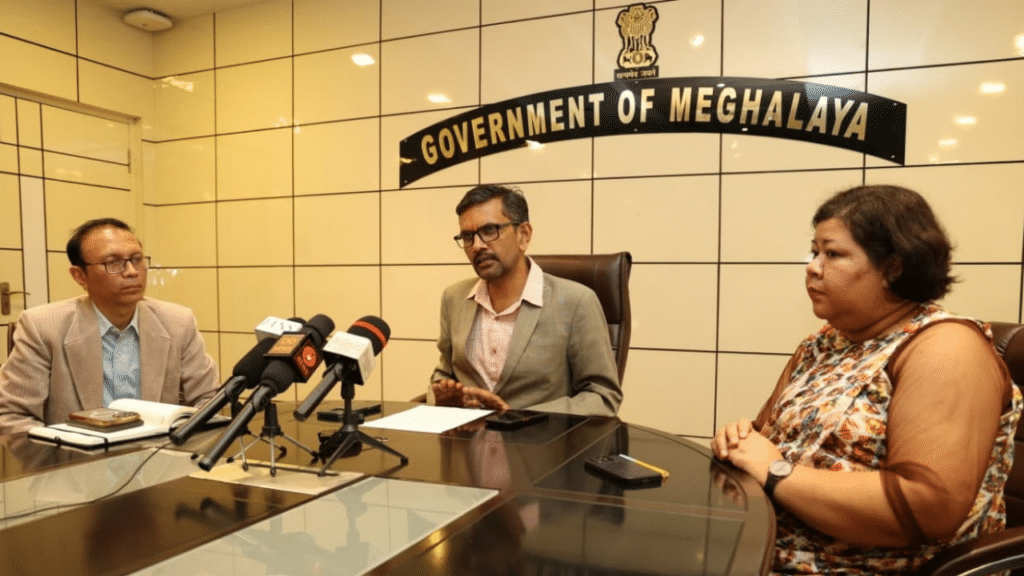
Jowai, June 2: A high-level meeting between representatives of the Governments of Meghalaya and Assam on Tuesday concluded with a consensus aimed at maintaining peace and resolving disputes in the Lapangap area of difference.
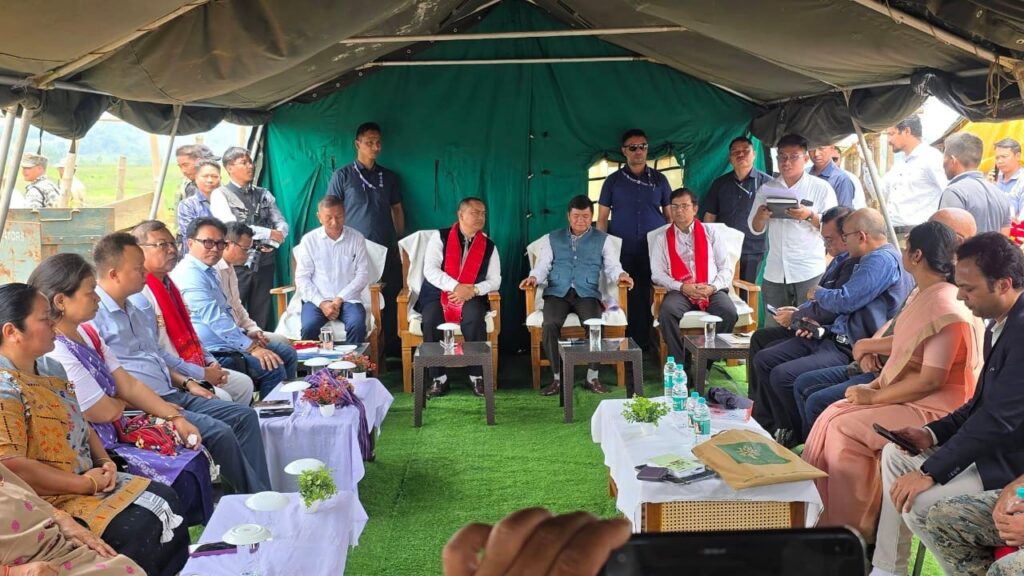
The meeting, held at the Assam Police Camp, brought together political leaders, senior civil and police officials, and local representatives from both states. It was convened as a follow-up to recent discussions between Meghalaya Chief Minister and Assam Chief Minister to find an amicable and peaceful solution to issues affecting the border area.
The Assam delegation was led by Karbi Anglong Autonomous Council (KAAC) Chief Executive Member and MLA Dr. Tuliram Ronghang and included Member of Parliament Amarsing Tisso, Additional Chief Secretary (Home & Political) Ajay Kumar Tiwari, senior KAAC members, legislators, and district officials from West Karbi Anglong.
The Meghalaya delegation was headed by Deputy Chief Minister Sniawbhalang Dhar and included Principal Secretary Frederick R. Kharkongor, Commissioner and Secretary Cyril V. Diengdoh, Secretary Garod L.S.N. Dykes, Jaintia Hills Autonomous District Council (JHADC) Chief Executive Member Thombor Shiwat, and senior district administration and police officials from West Jaintia Hills.
Following extensive deliberations, both sides agreed that villagers of Lapangap would continue paddy cultivation in the foothill areas within the disputed zone. At the same time, villagers of Tahpat would be allowed to continue cultivating seasonal crops such as banana, pineapple, ginger and other similar crops on the hilltops and slopes.
The meeting further resolved that the issue of permanent boundary demarcation in the area of difference would be taken up and decided by the appropriate committee at the state level.
Both governments and local stakeholders also agreed to uphold peace, harmony and tranquillity in the area and refrain from any activities that could disrupt law and order.
The latest breakthrough comes after an earlier meeting of village representatives on May 18, facilitated by the Deputy Commissioner and Superintendent of Police of West Jaintia Hills District, failed to reach a conclusion due to differing views on the nature of plantation activities permitted in the disputed area.
Officials said the consensus achieved on Tuesday reflects the commitment of both state governments and local communities to resolve outstanding issues through dialogue and cooperation while safeguarding the interests of residents living in the border region.