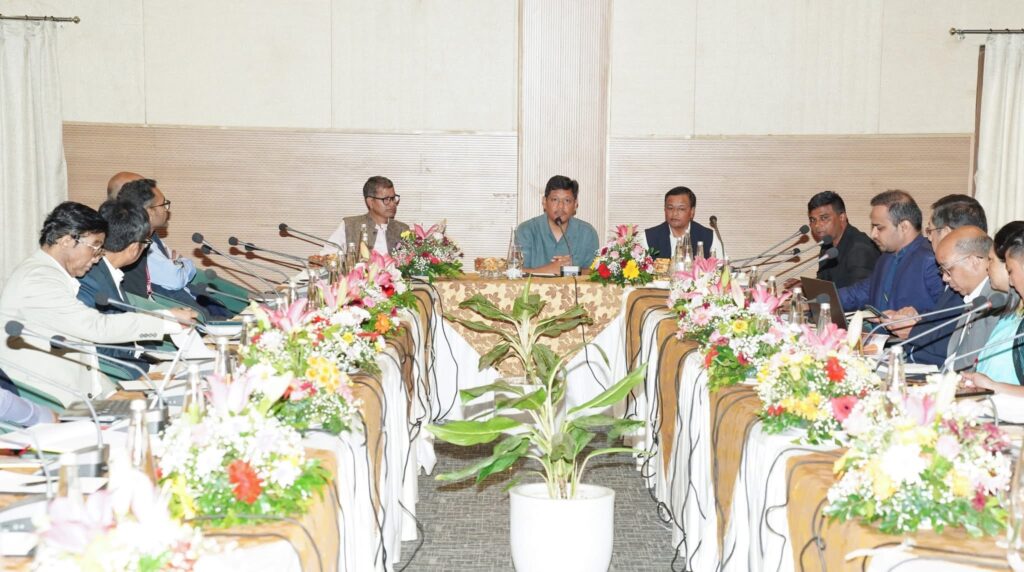
Shillong, June 3: Meghalaya Chief Minister Conrad K. Sangma on Wednesday chaired a high-level review meeting with the Education Department to assess the state’s performance in the Performance Grading Index (PGI) and review ongoing reforms aimed at strengthening the education sector.
During the meeting, officials presented the various indicators that contribute to the PGI framework and highlighted key initiatives being undertaken to improve learning outcomes, school infrastructure, vocational education and data management systems.
Reaffirming the government’s commitment to education, Sangma said Meghalaya remains focused on ensuring quality education for every child in the state.
Officials informed the meeting that Meghalaya’s education system comprises nearly 14,600 schools serving a population of around 30 lakh people, making it one of the most accessible schooling networks in the Northeastern region, including in remote and rural areas.
The review highlighted several reforms implemented over recent years, including investments in foundational learning, teacher welfare, school infrastructure, digital learning facilities and student support programmes.
Learning outcomes, which carry the highest weightage under the PGI framework, were identified as a key priority area. The government is implementing a range of measures to strengthen foundational literacy and numeracy, improve classroom teaching and enhance student learning.
The meeting also reviewed the phased upgradation of school infrastructure across the state. Efforts are underway to expand science laboratories, ICT facilities, smart classrooms, libraries, kitchen gardens, rainwater harvesting systems, drinking water facilities and solar-powered infrastructure in schools.
To accelerate implementation, the Chief Minister directed Deputy Commissioners and district administrations to work closely with the Education Department in a mission-mode approach to identify gaps and ensure timely delivery of projects.
A major focus of the review was vocational and skill-based education. Officials highlighted the Community Skill Integrated Curriculum, which introduces students from primary to secondary levels to practical and skill-oriented learning, preparing them for future employment opportunities.
The government is also strengthening student welfare initiatives, including improvements to the Mid-Day Meal programme and the installation of sanitary pad vending machines and incinerators in girls’ schools to create a safer and more supportive learning environment.
Sangma directed the department to closely monitor all performance indicators and undertake targeted interventions wherever necessary. He assured full government support to ensure schools receive the resources required to achieve measurable improvements.
The review further examined efforts to strengthen digital governance and educational data systems, including improved data reporting, digital compliance, Aadhaar integration and institutional record management to ensure educational progress is accurately reflected in national assessment frameworks.
Officials reported significant progress under the school rationalisation programme. Out of 14,582 schools in Meghalaya, 3,198 schools have already been merged or consolidated to improve teacher deployment, optimise resources and enhance service delivery.
Addressing the meeting, the Chief Minister said the reforms undertaken over the past few years are laying the foundation for long-term transformation in the education sector.
“We are aware where Meghalaya stands, and we are equally aware of the progress we are making. Education is a long-term investment, and the reforms we have undertaken—from strengthening support for teachers to focusing on foundational learning and improving school infrastructure—are laying the foundation for lasting change,” Sangma said.
He added that while the state has ensured access to schools for children across Meghalaya, the next objective is to ensure every school delivers high-quality learning outcomes.
The Chief Minister also stressed the need for a strategic, scientific and data-driven approach to improving educational performance, calling for regular assessments, evidence-based interventions and stronger coordination between schools, districts and the state government.
An official at the meeting noted that PGI scores largely reflect structural, administrative and data-reporting challenges and do not adequately capture the talent and potential of Meghalaya’s students.
The review reaffirmed the government’s commitment to building a stronger, more inclusive and future-ready education system that equips every child in Meghalaya with the knowledge, skills and opportunities needed to succeed.