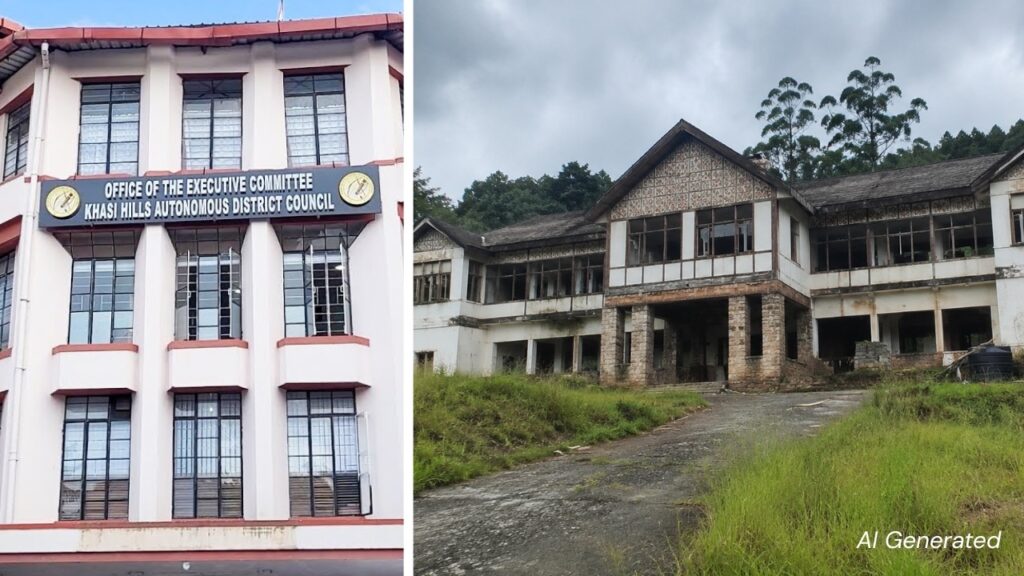
Shillong, June 27: The Centre of Learning, Knowledge and Services (COLKS) has strongly refuted allegations made by KHADC Chief Executive Member Winston Tony Lyngdoh regarding the lease and operation of the Khasi Traditional Medicine Institute at Lum Sohpetbneng.
Responding to claims that the institute remained non-functional nearly two years after being handed over, COLKS said the facility was received in a dilapidated condition without electricity, water supply, plumbing, or proper boundary fencing. It stated that these deficiencies, which were the responsibility of the KHADC, delayed the project’s implementation despite COLKS offering to invest substantially in restoring the infrastructure. Electricity was reportedly connected only in February 2025, while water shortages continue to affect operations.
COLKS also said the premises were occupied by its staff since handover and that progress was further hampered by a burglary in June 2025 and a lightning strike the following month, both of which caused significant damage to the property.
On allegations of unpaid lease rent, COLKS maintained that it had sought an 18-month moratorium due to the condition of the facility and claimed the KHADC had granted an extension for the first payment until December 2025. It denied receiving repeated reminders or ignoring communications, calling the allegation “completely fabricated.”
Addressing claims that the Khasi Traditional Medicine Commission (KTMC) had not been consulted before the lease was awarded, COLKS said the project followed an open Expression of Interest process and was awarded after due scrutiny. It further noted that the KTMC was reconstituted only after the EOI was issued and that the lease itself provided for the absorption of four KTMC staff.
Rejecting suggestions that it lacked seriousness or commitment, COLKS said it had held consultations with traditional practitioners, developed curriculum frameworks, engaged external experts, and requested KHADC to nominate a representative to the project’s governing committee, but received no response.
The organisation alleged that communication from the KHADC became inconsistent after December 2025 despite regular correspondence until then. It further expressed disappointment that the matter had been politicised, stating that the initiative was intended to promote indigenous healing systems through collaboration.
COLKS said its response was issued to place the factual record in the public domain and ensure that the project is assessed on documented facts rather than what it described as incomplete and misleading public assertions.