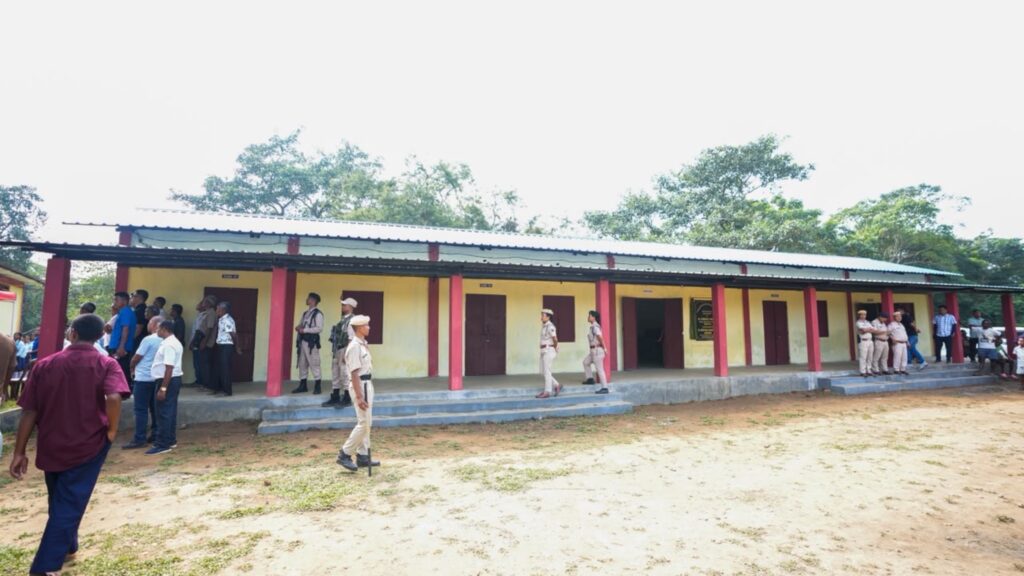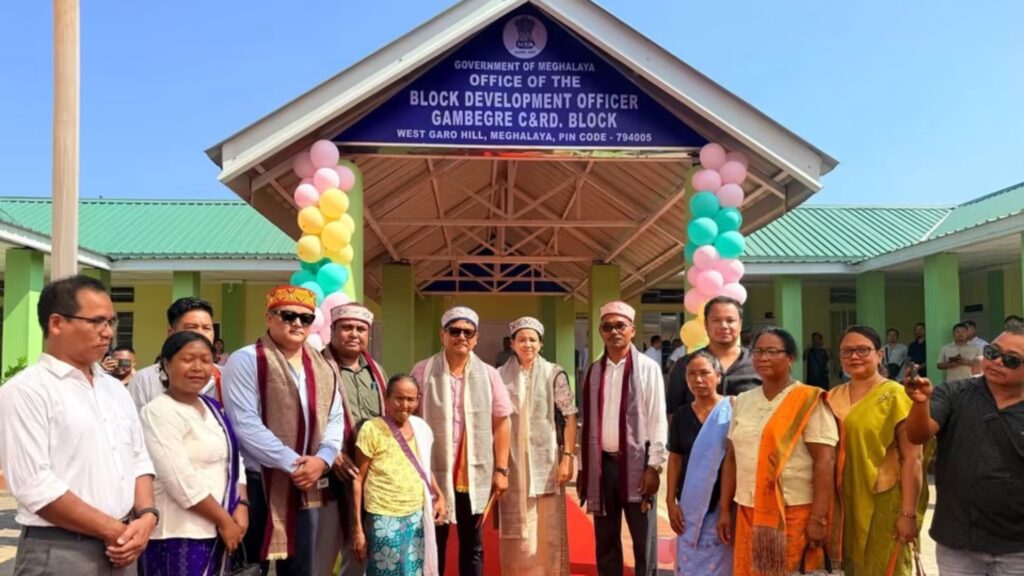
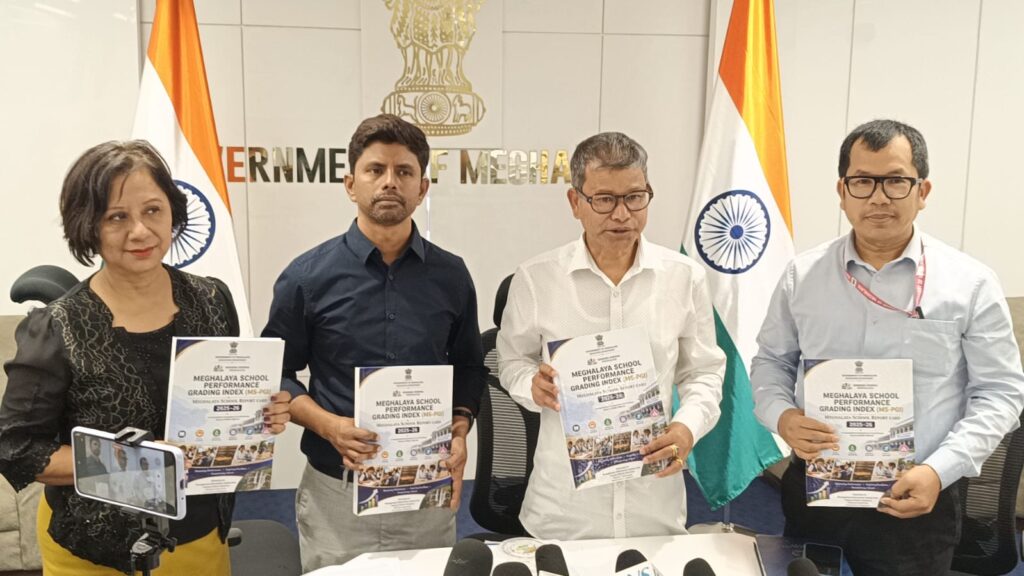
Shillong, July 24: Meghalaya on Friday launched its first-ever Meghalaya School Performance Grading Index (MSPGI) 2025-26, a comprehensive school-level assessment framework that will evaluate the performance of all 11,443 recognised schools across the state.
Education Minister of Meghalaya released the index, which has been prepared by the Education Department using certified UDISE+ 2025-26 data. The framework assesses schools across 43 indicators under five key domains—Accessibility, Digital Education, Infrastructure Facilities, National Education Policy (NEP) Activities, and Quality Parameters—with a maximum score of 1,000 points. Each school will receive an individual report card indicating its score, performance grade and ranking.
Speaking on the occasion, the Minister said the MSPGI is intended to serve as a diagnostic and planning tool rather than merely ranking schools. The framework is designed to help school heads, teachers, School Management Committees and education authorities identify institutional strengths and areas requiring improvement, enabling better planning and targeted interventions.
The assessment is based entirely on authenticated UDISE+ data submitted and certified by schools themselves, ensuring transparency and objectivity. Schools will be classified into 17 performance grades, ranging from Utkarsh (Outstanding) to Akanshi-10 (Intensive Support), allowing them to be evaluated against fixed standards instead of only in comparison with one another.
The department said the MSPGI has been modelled on the Performance Grading Index (PGI) of the Ministry of Education, Government of India, but extends the assessment to the individual school level. Officials noted that improvements in school performance under the MSPGI are expected to strengthen Meghalaya’s standing in the national PGI.
According to the department, Meghalaya’s PGI score has already improved significantly from 401.62 points in 2022-23to 525.71 points in 2025-26, moving the state from the Akanshi–3 category to Akanshi–1. This marks the first time Meghalaya has moved out of the lowest performance band under PGI 2.0.
Schools have been advised to use their report cards as the basis for an improvement cycle by reviewing results, identifying priority gaps, preparing action plans, seeking support from Block and District authorities where necessary, and monitoring progress during subsequent assessment cycles. High-performing schools have also been encouraged to serve as model institutions for peer learning.
The Education Department clarified that the MSPGI complements existing academic inspections and classroom assessments and should not be viewed as a standalone measure of students’ learning outcomes. The Minister reiterated the government’s commitment to evidence-based planning and continuous improvement in school education, expressing confidence that the new framework will further strengthen institutional standards and improve Meghalaya’s performance under the national PGI in the years ahead.