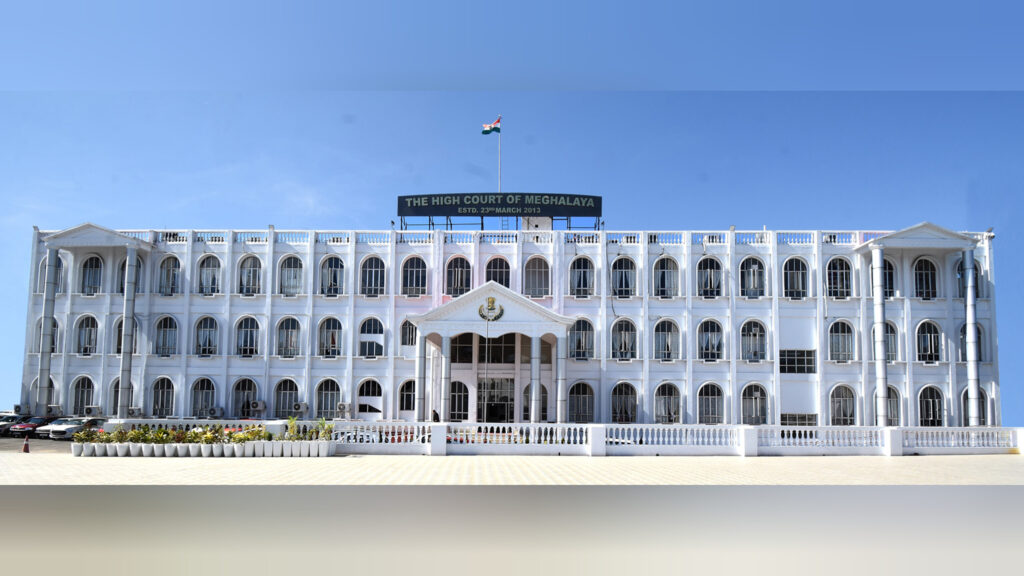
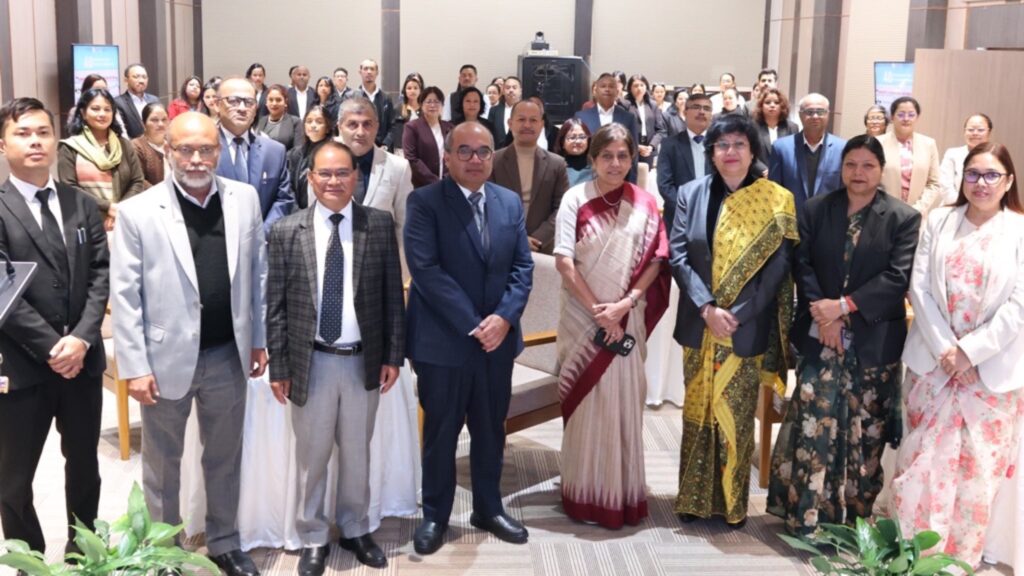
Shillong, November 4: Chief Justice of the Meghalaya High Court, Justice Revati Mohite Dere, has emphasised the importance of mediation as an effective means of resolving disputes amicably, stating that dialogue, understanding and empathy can help restore relationships and prevent prolonged litigation. Speaking at a 40-hour training programme on “Concepts and Techniques of Mediation” at the Conference Hall of the High Court of Meghalaya, Justice Dere expressed confidence that the programme would equip participants with the necessary skills to become effective mediators.
The training programme is being organised by the Meghalaya State Legal Services Authority in collaboration with the Mediation and Conciliation Project Committee of the Supreme Court of India and the Mediation Committee of the High Court of Meghalaya.
Addressing the gathering, the Chief Justice highlighted the growing importance of mediation in resolving disputes arising in families, workplaces, businesses and communities, describing it as a constructive alternative to the traditional adversarial system of adjudication. “Mediation fosters dialogue, understanding and empathy. Its true strength lies not in force, but in dialogue that heals and restores relationships,” she said.
Justice Dere explained that mediation empowers disputing parties to take control of their disagreements and arrive at mutually acceptable solutions rather than relying entirely on judicial decisions. Illustrating the effectiveness of mediation through the example of two brothers disputing over an orange, she explained how a mediator could identify the actual needs of both parties through dialogue and arrive at a solution that might not be possible through conventional litigation. She observed that mediation is particularly effective in family, matrimonial and civil disputes, where preserving relationships is often as important as resolving the disagreement itself.
The Chief Justice stressed that effective mediators must possess strong communication skills, patience, persistence, impartiality and an open mind. She said mediators should carefully choose their words and adopt appropriate strategies depending on the nature of the dispute to ensure that neither party feels disadvantaged.
Highlighting the advantages of mediation, Justice Dere said the process is less confrontational, flexible, confidential and cost-effective, while providing faster resolutions and allowing parties greater control over the outcome. She noted that conventional litigation can often be time-consuming, emotionally exhausting and unpredictable, whereas mediation creates opportunities for parties to reach settlements through mutual understanding.
Referring to challenges in matrimonial relationships, Justice Dere underscored the importance of communication and dialogue in resolving differences. She observed that mediation enables parties to find closure and move forward instead of remaining involved in prolonged conflicts. She further emphasised that mediation is founded on the principles of voluntary participation, confidentiality, neutrality and mutual understanding, encouraging mediators to adopt creative approaches and develop solutions suited to individual cases.
The Chief Justice also called upon stakeholders in the justice delivery system to promote greater public awareness of mediation and its benefits so that more people could resolve disputes peacefully without resorting to lengthy court proceedings.
Justice H.S. Thangkhiew and Justice W. Diengdoh, Judges of the High Court of Meghalaya, also addressed the gathering. The programme was attended by Justice B. Bhattacharjee, judicial officers and participants undergoing mediation training.