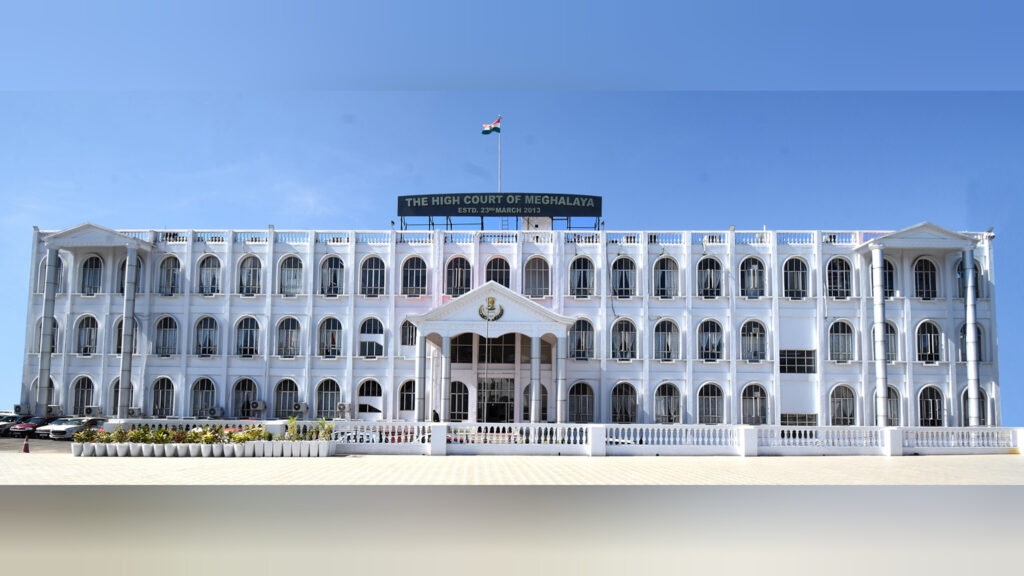
Shillong, June 29: The Meghalaya High Court has dismissed the State government’s petition seeking cancellation of bail granted to Sonam Raghuvanshi, an accused in the Raja Raghuvanshi murder case, holding that the prosecution failed to establish valid grounds for setting aside the trial court’s order.
In a judgment delivered on Monday, Justice W. Diengdoh upheld the order of the Additional Deputy Commissioner (Judicial), which had granted bail to Sonam Raghuvanshi primarily on the ground that the investigating agency had failed to effectively communicate the grounds of her arrest in accordance with Article 22(1) of the Constitution and Section 47 of the Bharatiya Nagarik Suraksha Sanhita (BNSS).
The State of Meghalaya had challenged the bail order, arguing that the accused had previously filed three unsuccessful bail applications and that all legal procedures regarding her arrest had been followed. The Advocate General contended that Sonam was aware of the reasons for her arrest, having signed multiple documents and having been informed before the transit remand and subsequent remand proceedings. The State also maintained that any reference to the wrong legal provision in the arrest documents was merely a typographical error that did not prejudice the accused.
Counsel for Sonam Raghuvanshi, however, argued that she was never furnished with proper written grounds of arrest, as required by constitutional safeguards laid down by the Supreme Court. The defence submitted that this violated her fundamental rights and justified the grant of bail despite the seriousness of the allegations.
After examining the records, the High Court found that the document used by the police to communicate the grounds of arrest was merely a generic template containing multiple standard options without specifying the actual allegations against the accused. The Court observed that the format reflected a complete lack of application of mind, even including irrelevant statements such as references to desertion from the Armed Forces and offences committed outside India.
Justice Diengdoh held that such a document could not be treated as effective communication of the grounds of arrest and concluded that the constitutional mandate under Article 22(1) and the statutory requirement under Section 47 of the BNSS had been violated. The Court also noted that repeated references to a non-existent legal provision in the arrest documents further demonstrated non-application of mind by the investigating agency.
The High Court clarified that while the procedural lapse affected the legality of the arrest process, it did not invalidate the investigation, charge sheet or the ongoing trial against the accused. The Court further advised investigating agencies to ensure that arrest memos clearly and specifically state the grounds of arrest in compliance with constitutional requirements.
Finding no legal infirmity in the trial court’s decision to grant bail, the High Court dismissed the State government’s petition and declined to interfere with the bail order. The criminal petition was accordingly disposed of without any order as to costs.