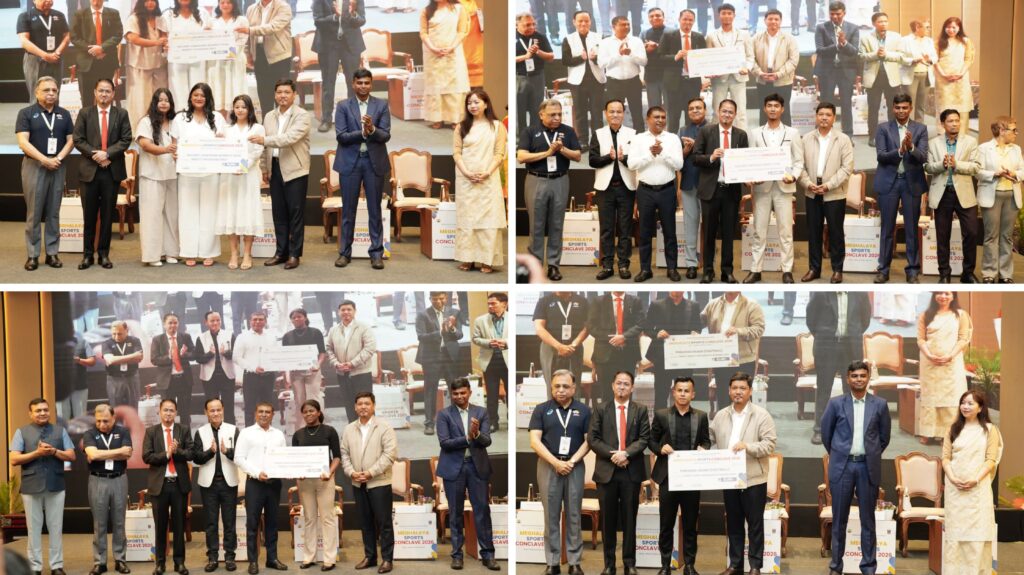
Shillong, June 16: Meghalaya took another significant step towards establishing itself as a leading sporting state as it hosted the Meghalaya Sports Conclave 2026 on Monday, bringing together sports administrators, policymakers, athletes, and industry experts to chart the future of sports development ahead of the 39th National Games, which the state will host in 2027.
Organised by the Department of Sports and Youth Affairs, the conclave served as a platform for discussions on sports governance, innovation, infrastructure, and athlete development. The event was attended by Chief Minister Conrad K. Sangma, Sports Minister Wailadmiki Shylla, and World Athletics Vice President Dr. Adille Sumariwalla, along with several distinguished guests from the sporting fraternity.
The conclave also featured renowned athletes, including Olympic medallist and world champion shooter Manu Bhaker, Olympic medallist hockey goalkeeper P.R. Sreejesh, sprinter and Arjuna Awardee Hima Das, Paralympic medallist Harvinder Singh, and World Archery Para Champion Sheetal Devi. The athletes shared their experiences and highlighted the importance of creating athlete-centric ecosystems and ensuring long-term support for sporting talent.
Addressing the gathering, Chief Minister Conrad K. Sangma said the state’s investments in sports were aimed at empowering youth and creating opportunities beyond medals and infrastructure. He stated that Meghalaya’s preparations for the National Games are part of a broader vision to build a sustainable sporting ecosystem for future generations.
The Chief Minister revealed that nearly 240 sports infrastructure projects have been completed, are under implementation, or are under construction across the state, with the number expected to exceed 500 by 2028. He also informed that ₹72.5 crore has been earmarked for Team Meghalaya’s preparations for the National Games. Since June 2025, more than 50,000 athletes have been identified through talent scouting initiatives, while over 1,200 athletes are undergoing structured training under various sports associations.
Highlighting the state’s progress, Sangma said Meghalaya’s greatest transformation has been a change in mindset, with growing confidence in hosting major sporting events, building world-class infrastructure, and competing at the national level. He cited the construction of the country’s largest football stadium as a symbol of the state’s sporting ambitions.
A major highlight of the inaugural ceremony was the recognition of Pynshngaiñ Kurbah, who won a bronze medal in canoeing for Meghalaya at the 38th National Games in 2025. He became the first recipient of the Meghalaya Outstanding Sportspersons Direct Appointment Policy (MOSDDP). Athletes from various sporting disciplines were also felicitated during the event.
In his welcome address, Sports Minister Wailadmiki Shylla described the conclave as a landmark event at a crucial juncture in Meghalaya’s sporting journey. He said the upcoming National Games present an opportunity not only to showcase the state’s sporting capabilities but also its culture, infrastructure, talent, and aspirations before the nation.
The minister reiterated the government’s commitment to nurturing talent from even the remotest villages and stressed that the true measure of success would be the legacy created through improved facilities, trained coaches, empowered athletes, active communities, and inspired youth. He informed that nearly ₹40 crore has already been released as the first tranche to sports associations, while ₹23.37 crore has been earmarked for training, competition exposure, nutrition support, and capacity building programmes.
World Athletics Vice President Dr. Adille Sumariwalla commended Meghalaya’s efforts in preparing for the National Games and praised the state for its improved performance in national competitions. He emphasised the importance of creating structured pathways to identify and nurture talent from the grassroots level to elite competition.
As Meghalaya gears up for the 39th National Games in 2027, the Sports Conclave 2026 underscored the state’s commitment to using sports as a tool for youth empowerment, economic development, and community growth. The event reaffirmed the government’s vision of building a vibrant sporting culture and creating opportunities for the next generation of athletes across the state.