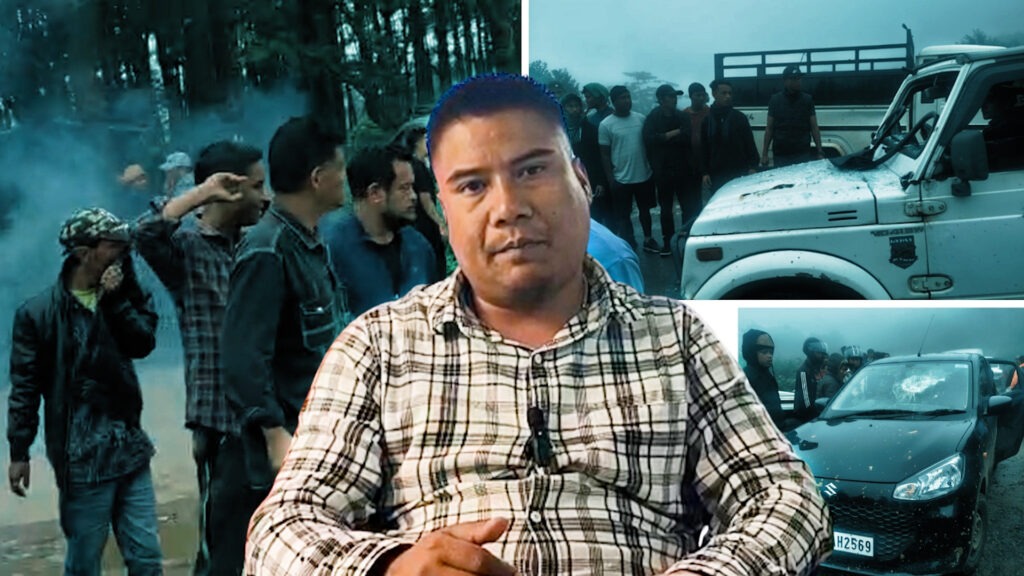
Jowai, August 1: The Jaiñtia National Council (JNC), through its central president Sambormi Lyngdoh, has strongly condemned what it described as alleged police excesses, intimidation and state-backed actions against its leaders and local residents ahead of the recent public hearing in Sutnga.
In a statement, Lyngdoh said the organisation was deeply anguished over the events of July 30, alleging that residents of Elaka Sutnga and neighbouring villages were subjected to intimidation, violence and coercion ahead of the public hearing.
According to the JNC, its leaders had travelled to extend solidarity to the affected communities but were allegedly stopped by police personnel at Umpleng, surrounded and treated like “criminals or anti-social elements”. The organisation alleged that six persons, including the JNC president, were detained and that its members were subjected to force, including lathi charges.
The JNC criticised what it termed the “disrespectful and excessive conduct” of the police towards a civil society organisation. It further alleged that police personnel were brought in from Garo Hills to detain its leaders and suppress local residents in Elaka Nongkhlieh and Elaka Sutnga.
The organisation also alleged that the state government was prioritising development projects at the cost of local livelihoods, claiming that land acquisition, disruption of villages and suppression of dissent were taking place with alleged support from corporate-backed groups.
The JNC questioned the grounds for the detention of its leaders while they were attempting to support residents attending the public hearing. It also sought clarification on the deployment of police personnel from Garo Hills and alleged differential treatment of those opposing and supporting the public hearing.
The organisation further questioned why alleged obstruction of public roads by persons it claimed were linked to Shree Cement was not prevented, particularly when it reportedly affected the movement of residents and patients. It also sought answers over alleged incidents of stone-pelting and damage to vehicles during the public hearing.
The JNC alleged that senior state leaders, including the Chief Minister and Deputy Chief Ministers, had enabled such actions. It also claimed that attempts were made to influence public participation through monetary inducements, although the allegation has not been independently verified.
The organisation accused the ruling party of exploiting the natural resources of Jaiñtia Hills for political and financial gains and alleged that elected representatives from the region had failed to adequately safeguard the interests of the people.
The JNC said it would continue to document and raise what it described as instances of injustice and abuse of power and would pursue accountability through democratic means.
Rejecting the legitimacy of the public hearing on the proposed Shree Cement project, the organisation alleged that the process was neither free nor fair and described it as a “private exercise between the government and the company” rather than a genuine platform for public consultation.
The JNC maintained that the recent developments did not represent a defeat for the organisation, but rather marked the beginning of a broader movement. It reaffirmed its commitment to continuing its opposition through democratic means and in collaboration with affected communities.